The lost GH sound: night, daughter, laugh and though
English used to have a sound it no longer has: a breathy, scraping consonant made at the back of the mouth, like the ch in German Nacht or Scottish loch. Old English wrote it with h — niht, dohtor, hlæhhan — and Middle English scribes began writing it gh.
In later Middle English and early Modern English the sound was lost. In most words it simply disappeared, often changing the vowel before it. In a few it turned into F. Either way, the spelling had already been fixed, and it kept the GH.
That is why English has so many silent GHs — and why -ough can be said at least six different ways. Each word below has its full story on its own page.
night
The GH in night was once a real sound, like the ch in German Nacht. Here is how English lost it, and why night now rhymes with bite.
- Then · Old English
- niht
- Say it
- NITE
knight
Knight was once pronounced with a K and a throaty GH, something like "k-NIKHT". Here is how both sounds disappeared and the spelling stayed.
- Then · Old English
- cniht
- Say it
- NITE
daughter
Daughter comes from Old English dohtor, and the GH was a real throaty sound, like German Tochter. Here is how it went silent.
- Then · Old English
- dohtor
- Say it
- DAW-der
laugh
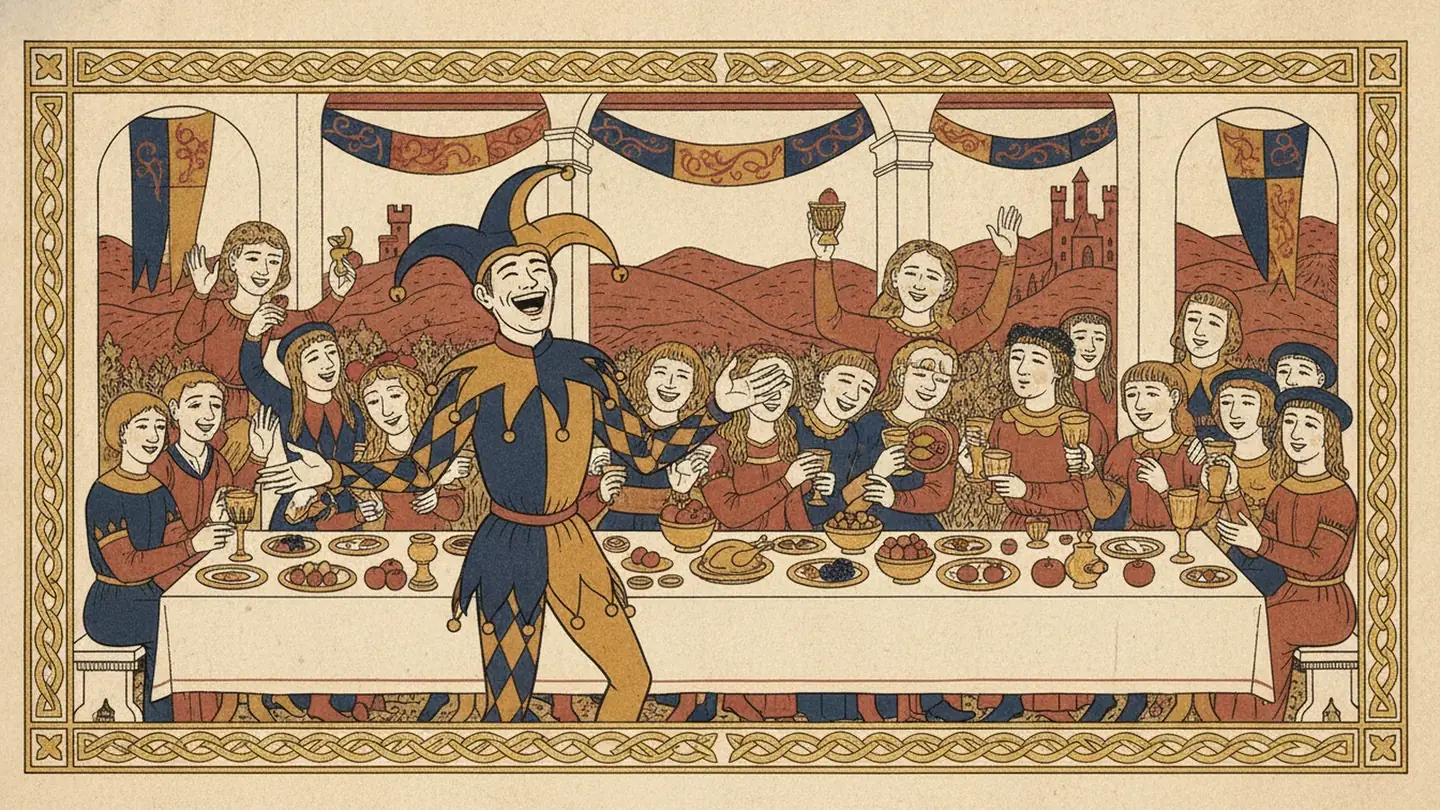
In laugh, the old throaty GH sound did not disappear — it turned into an F. Here is the history behind laugh, and why night went silent instead.
- Then · Old English
- hlæhhan
- Say it
- LAF

though
Though comes from a Viking word that pushed out Old English þēah. Its GH is a fossil of a lost throaty sound; today it is just "tho".
- Then · Old English
- þēah
- Say it
- THOH
Where the sound still lives
The old GH sound has not vanished everywhere. Scots still says nicht for night, and traditional dialects in Scotland and the north of England kept the throaty sound in words of this kind. German and Dutch, English's close relatives, never lost it: Nacht, Tochter, lachen.
What this means for your accent
In American English a GH in the middle or at the end of a word is either silent (night, daughter, though, taught) or F (laugh, enough, cough, tough). It is never a G, and never a throaty "kh". When you meet a new GH word, check a dictionary for which of the two it is — the spelling cannot tell you.
Questions people ask
+Why does English have a silent GH?
GH was once a real sound, like the ch in German Nacht. English lost it in late Middle or early Modern English, after the spelling had been fixed.
+Why is GH pronounced F in laugh and enough?
In a few words the old throaty sound changed into F instead of disappearing. Which words did so depended on dialect, and Standard English inherited a mix.
+Did people really pronounce the GH in night?
Yes — something like nikht, with a throaty sound. Scots nicht and German Nacht still have it.
More word stories
Why English spelling doesn't match the sound
Silent letters, odd vowels, colonel said "kernel": the three reasons English spelling stopped matching speech, with a story for each word.

The days of the week: gods, planets and lost sounds
Why the English days of the week are named after Woden, Thor, Frigg and Saturn, and how each name is pronounced in American English today.
The silent K: knight, knee, know and knife
Why English writes a K in knight, knee, know and knife but doesn't say it — the kn- sound was pronounced until the 1600s.

The silent W: write, wrong, two, sword, answer
Why English spells a W in write, wrong, two, sword and answer but doesn't say it. Every one of those Ws was once a real sound.
The silent B: lamb, comb, thumb, debt, doubt
Some silent Bs were once pronounced (lamb, comb); others never were (thumb, debt, doubt). How to tell a lost sound from a letter that was added.

The silent T: castle, Christmas, often and fasten
Why castle, Christmas and fasten have a silent T, and why many people now say the T in often again. History plus American pronunciation tips.

Silent letters that were never pronounced
The B in debt, the P in receipt and the S in island were never said. Scholars added them to make English look Latin. Here is the full story.
The silent L: walk, half, calm, could and salmon
Why the L is silent in walk, half, calm, folk and should — and why could and salmon have an L that was never pronounced in the first place.