The days of the week: gods, planets and lost sounds
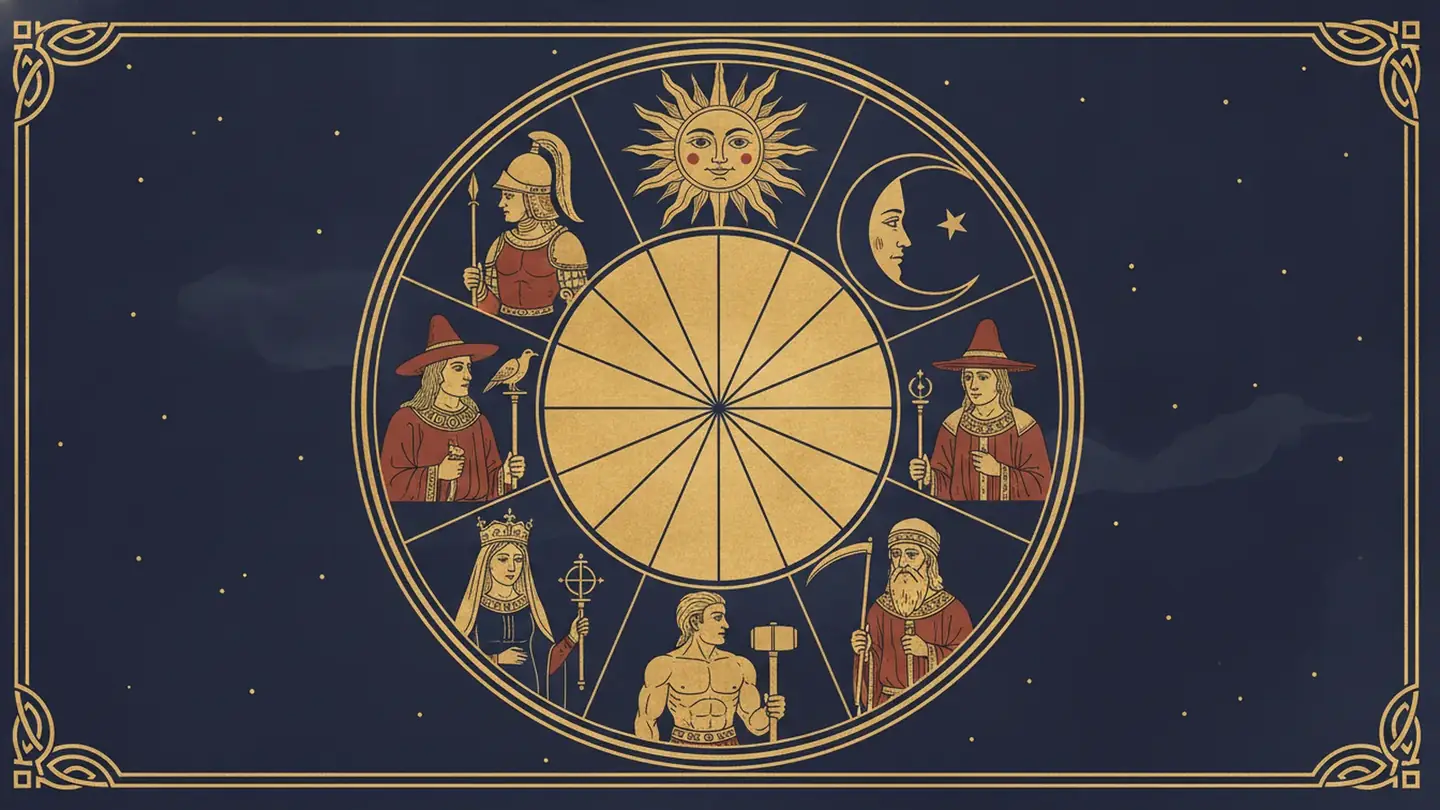
The English week is a translation. The Romans named their seven days after the seven heavenly bodies they could see moving across the sky — the sun, the moon, and the five planets known then, each a god: Mars, Mercury, Jupiter, Venus and Saturn. That is why French still has mardi (Mars), mercredi (Mercury), jeudi (Jupiter) and vendredi (Venus).
Germanic peoples adopted the Roman week while they lived along the empire's borders, and they translated it rather than borrowing it. The sun and moon were easy: Sunday and Monday. For the gods, they looked for their own equivalent of each Roman one: Mars became Tiw, Mercury became Woden, Jupiter became Thunor (Thor) and Venus became Frig. Only Saturn had no match, so Saturday kept the Roman god.
Over a thousand years of sound change, most of these names stopped sounding the way they are spelled. Each day below has the full story on its own page.
Monday
Monday is the moon's day, from Old English Mōnandæg. So why does it sound like "MUN-day" and not "MOON-day"? The vowel took a different road.
- Then · Old English
- Mōnandæg
- Say it
- MUN-day
Tuesday
Tuesday is named for Tiw, the Germanic god of war. Here is where the name comes from, and why Americans say "TOOZ-day" while the British say "TYOOZ-day".
- Then · Old English
- Tīwesdæg
- Say it
- TOOZ-day
Wednesday
Wednesday was "Woden's day", and English speakers once pronounced the D. Here is how the D went silent and why the spelling never changed.
- Then · Old English
- Wōdnesdæg
- Say it
- WENZ-day
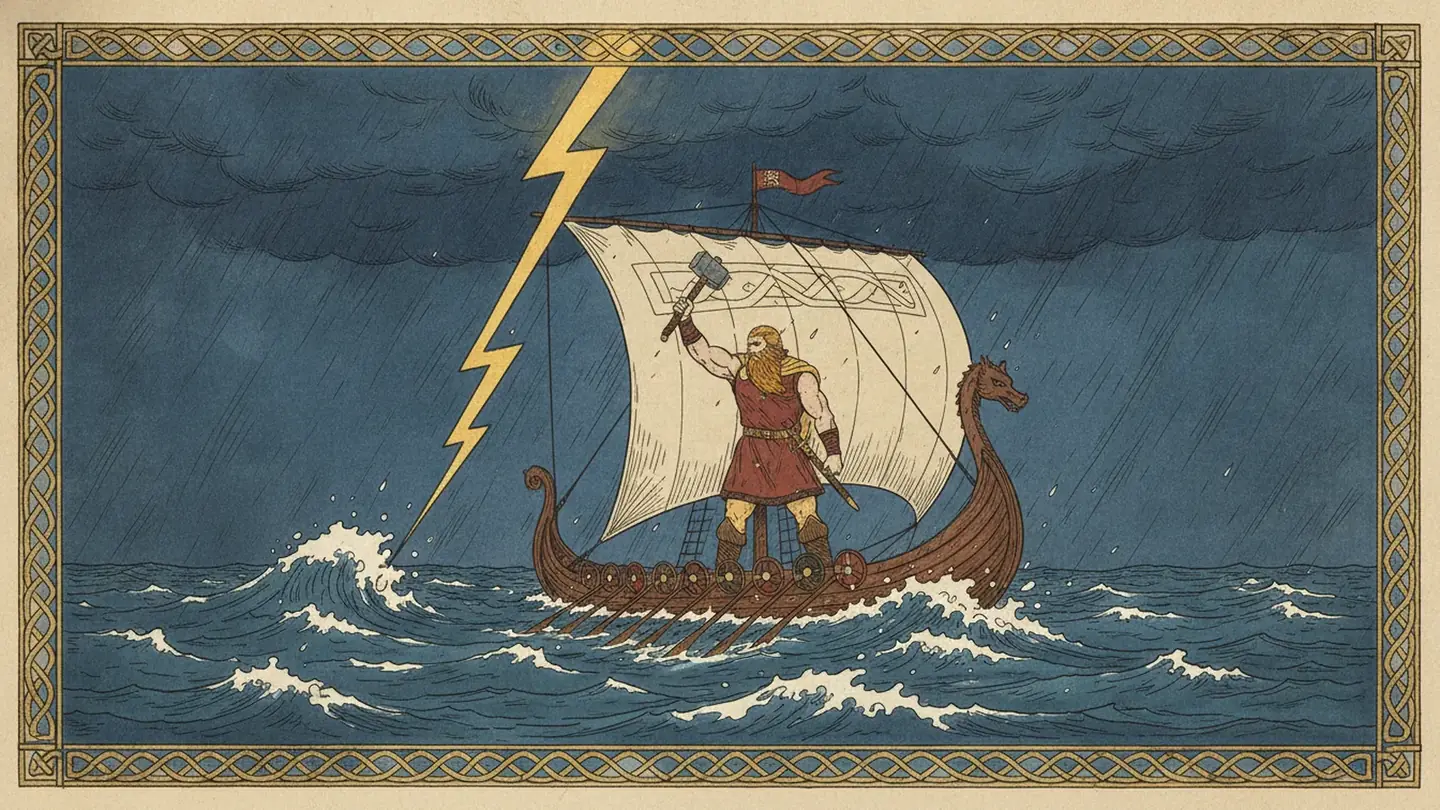
Thursday
Thursday is Thor's day. The native English name was Thunresdæg, from Thunor, but the Vikings' Norse form is the one that stuck.
- Then · Old English
- Þunresdæg
- Say it
- THURZ-day
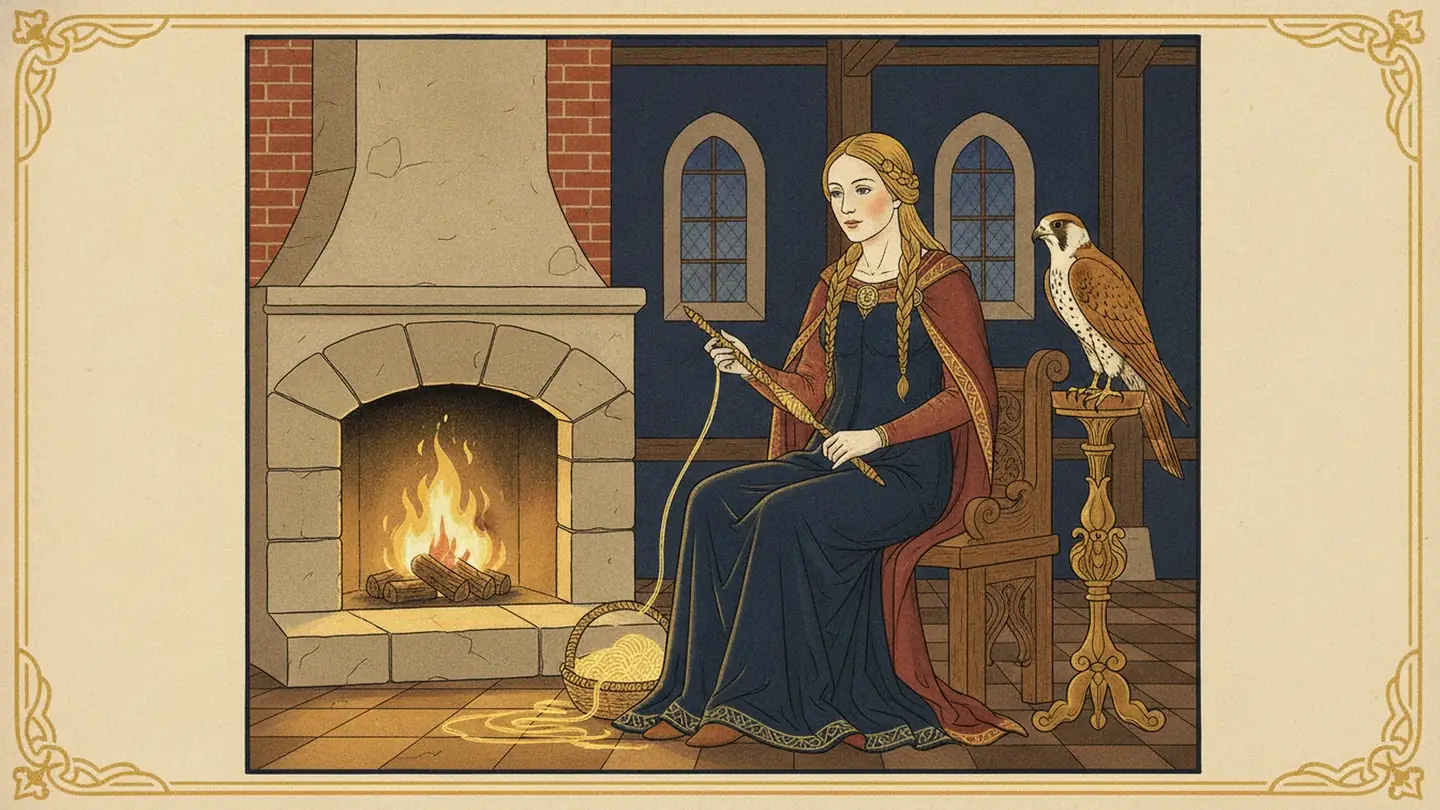
Friday
Friday is named for Frig, the Germanic goddess matched with Venus. Its I once sounded like "ee" — the Great Vowel Shift turned it into "eye".
- Then · Old English
- Frīgedæg
- Say it
- FRY-day
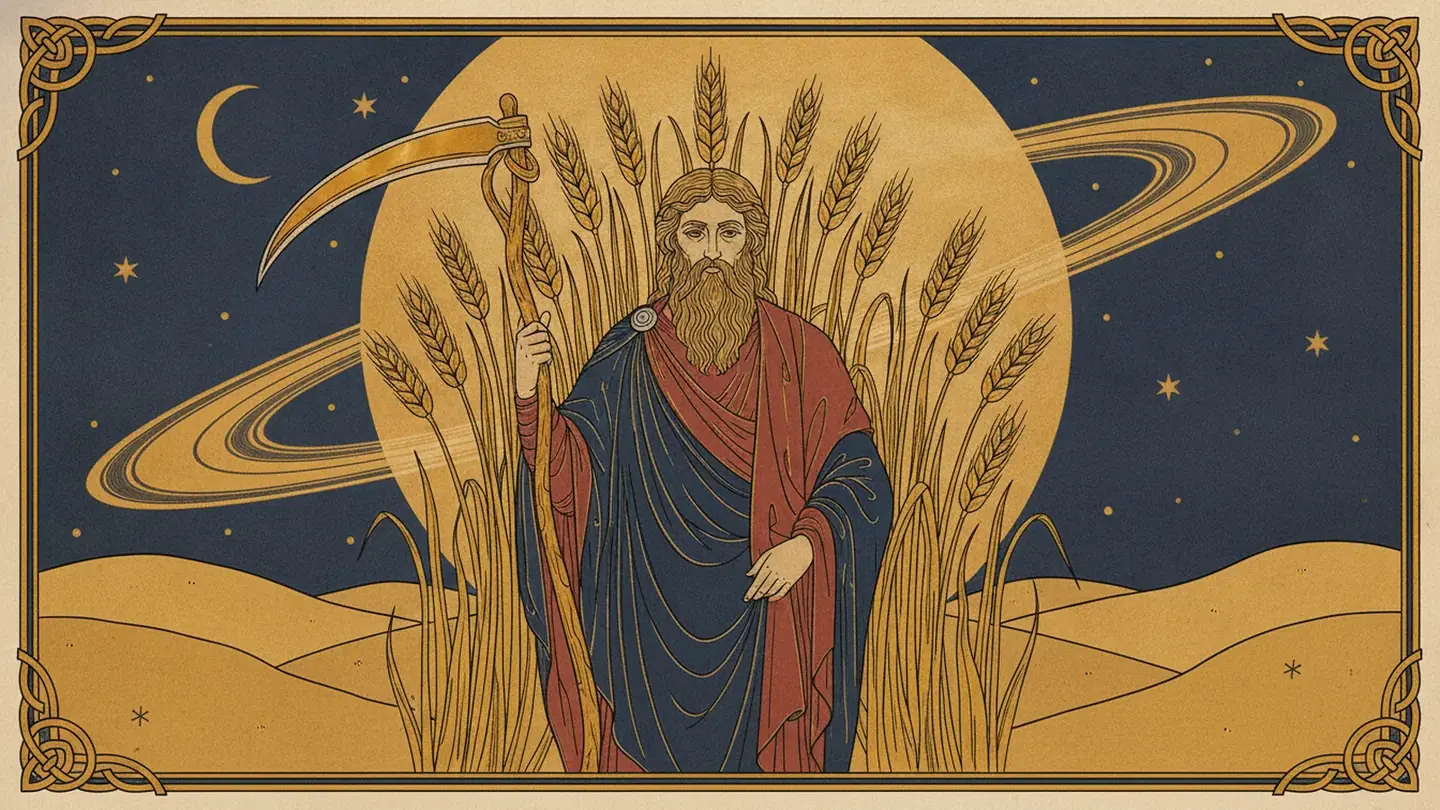
Saturday
Saturday is Saturn's day — the one English weekday still named for a Roman god. Plus why Americans say "SAD-er-day" with a soft, tapped T.
- Then · Old English
- Sæternesdæg
- Say it
- SAD-er-day
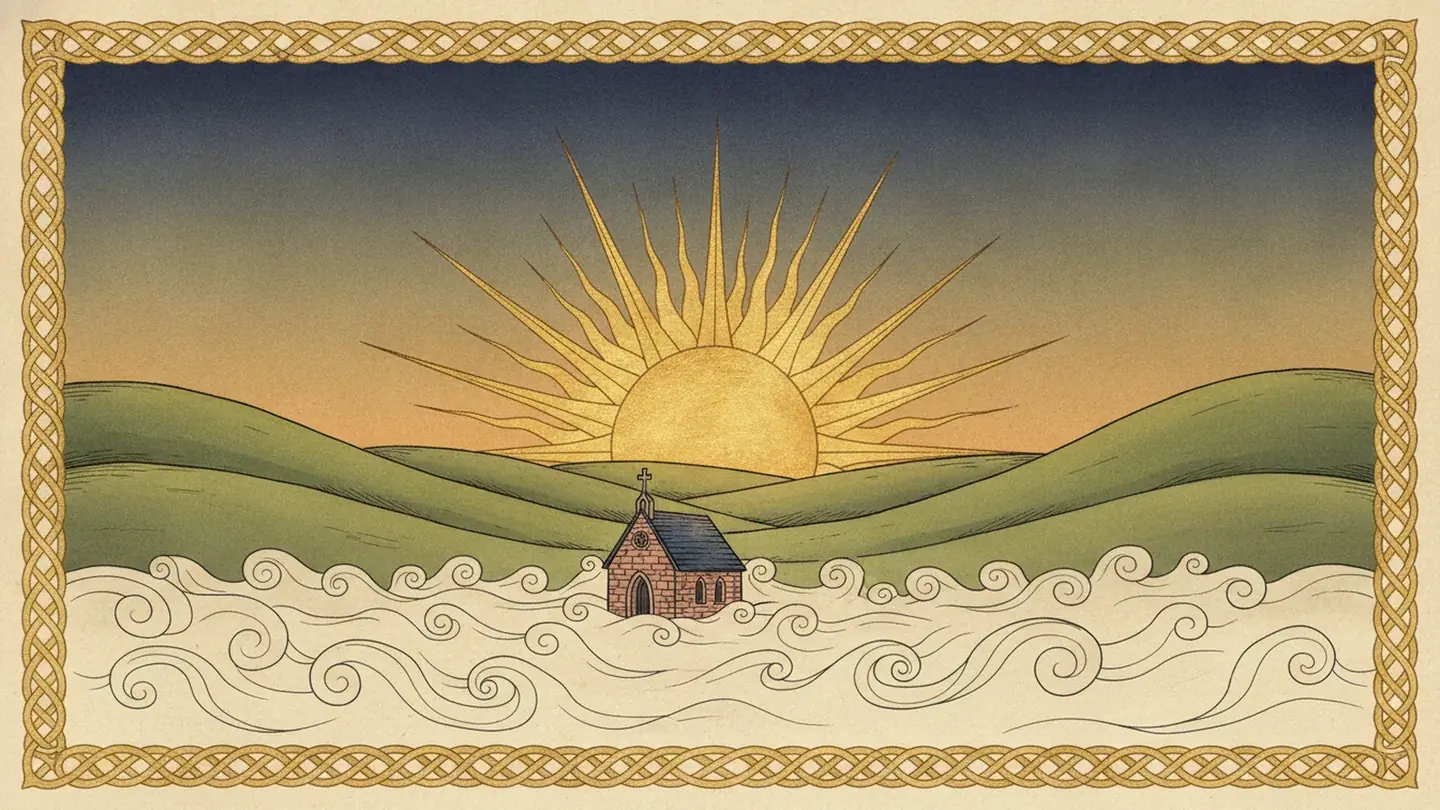
Sunday
Sunday is the sun's day, from Old English Sunnandæg. Its vowel moved from "oo" to "uh" — and son, spelled with an O, ended up sounding the same.
- Then · Old English
- Sunnandæg
- Say it
- SUN-day
The Z hiding in three of the days
Look at Tuesday, Wednesday and Thursday: each has an S before day. That S is the old possessive ending — Tiw's day, Woden's day, Thor's day — and in all three it is pronounced as a Z: TOOZ-day, WENZ-day, THURZ-day. Saying a hissing S there is one of the most common giveaways of a non-native accent.
The ending: "day" or "dee"?
Every name ends in Old English dæg, "day". In careful American speech the ending is a full "day"; in relaxed speech many Americans say "dee" — Mundee, Fridee. Both are standard; the full "day" is the safer choice for learners.
Questions people ask
+Why are the days of the week named after gods?
They copy the Roman week, which named each day after a heavenly body and its god. Germanic speakers swapped in their own gods: Tiw, Woden, Thunor (Thor) and Frig.
+Which day of the week is named after a Roman god?
Saturday — Saturn's day. It is the only English weekday that kept its Roman god.
+Why is the D in Wednesday silent?
It was pronounced in Old English (Wōdnesdæg, "Woden's day"), but speakers dropped it in late Middle English after the spelling had been fixed.
More word stories
Why English spelling doesn't match the sound
Silent letters, odd vowels, colonel said "kernel": the three reasons English spelling stopped matching speech, with a story for each word.
The silent K: knight, knee, know and knife
Why English writes a K in knight, knee, know and knife but doesn't say it — the kn- sound was pronounced until the 1600s.
The silent W: write, wrong, two, sword, answer
Why English spells a W in write, wrong, two, sword and answer but doesn't say it. Every one of those Ws was once a real sound.
The silent B: lamb, comb, thumb, debt, doubt
Some silent Bs were once pronounced (lamb, comb); others never were (thumb, debt, doubt). How to tell a lost sound from a letter that was added.
The lost GH sound: night, daughter, laugh and though
English GH was once a real sound, like German Nacht. Here is how it went silent in night and daughter but turned into F in laugh.

The silent T: castle, Christmas, often and fasten
Why castle, Christmas and fasten have a silent T, and why many people now say the T in often again. History plus American pronunciation tips.
Silent letters that were never pronounced
The B in debt, the P in receipt and the S in island were never said. Scholars added them to make English look Latin. Here is the full story.
The silent L: walk, half, calm, could and salmon
Why the L is silent in walk, half, calm, folk and should — and why could and salmon have an L that was never pronounced in the first place.