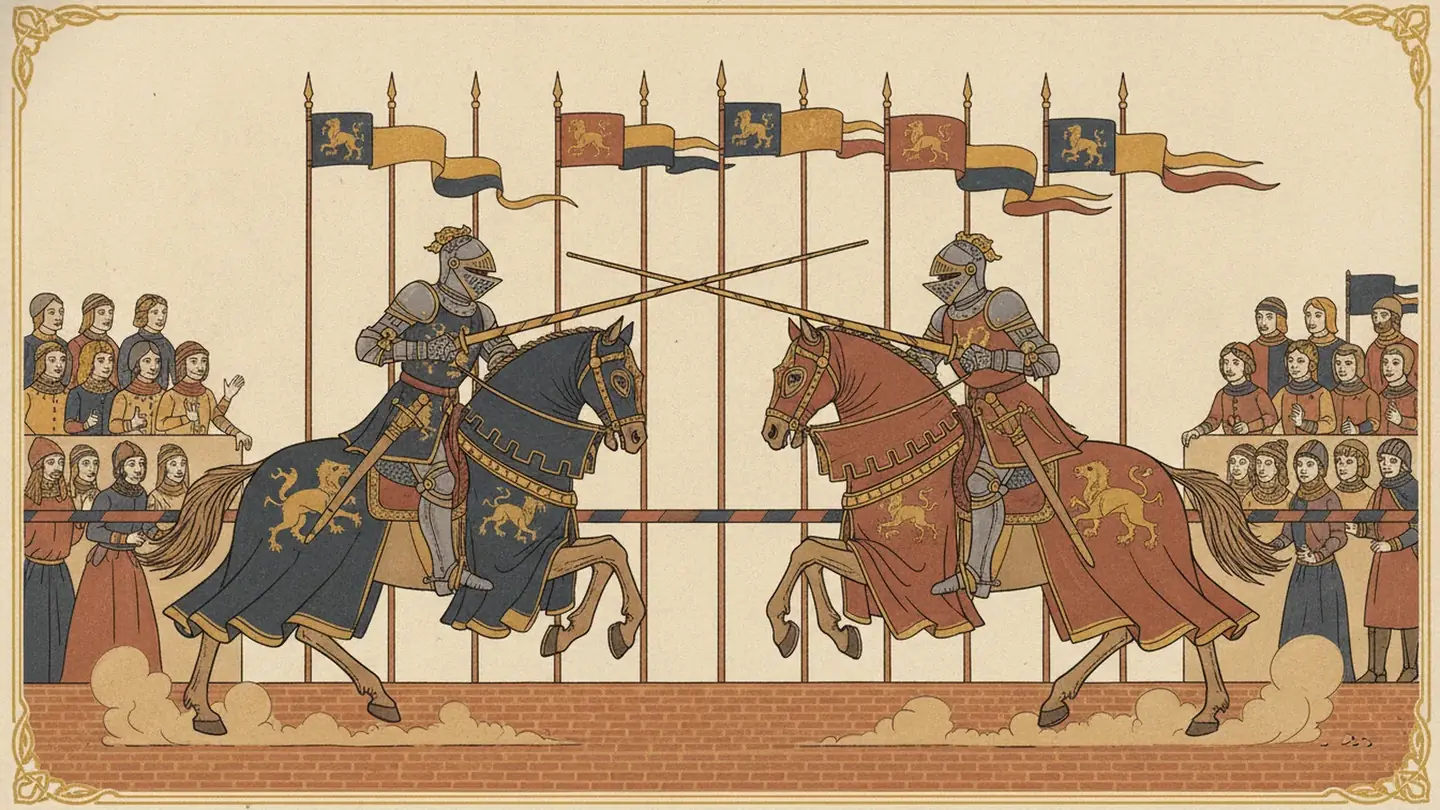
The silent K: knight, knee, know and knife
Every English word that starts with kn- once started with a real K sound. Old English cniht, cnēow and cnāwan — knight, knee, know — all began with a K followed by an N, the way German Knie and Knecht still do.
Then, in educated English during the 1600s, the cluster was simplified: kn- became plain N. The change was regular, so it hit every kn- word at once — knock, knot, knit, knuckle and knowledge along with the four below. The spelling, by then fixed by more than a century of printing, did not follow.
That is why the K is so reliable as a rule: at the start of an English word, before N, it is always silent.
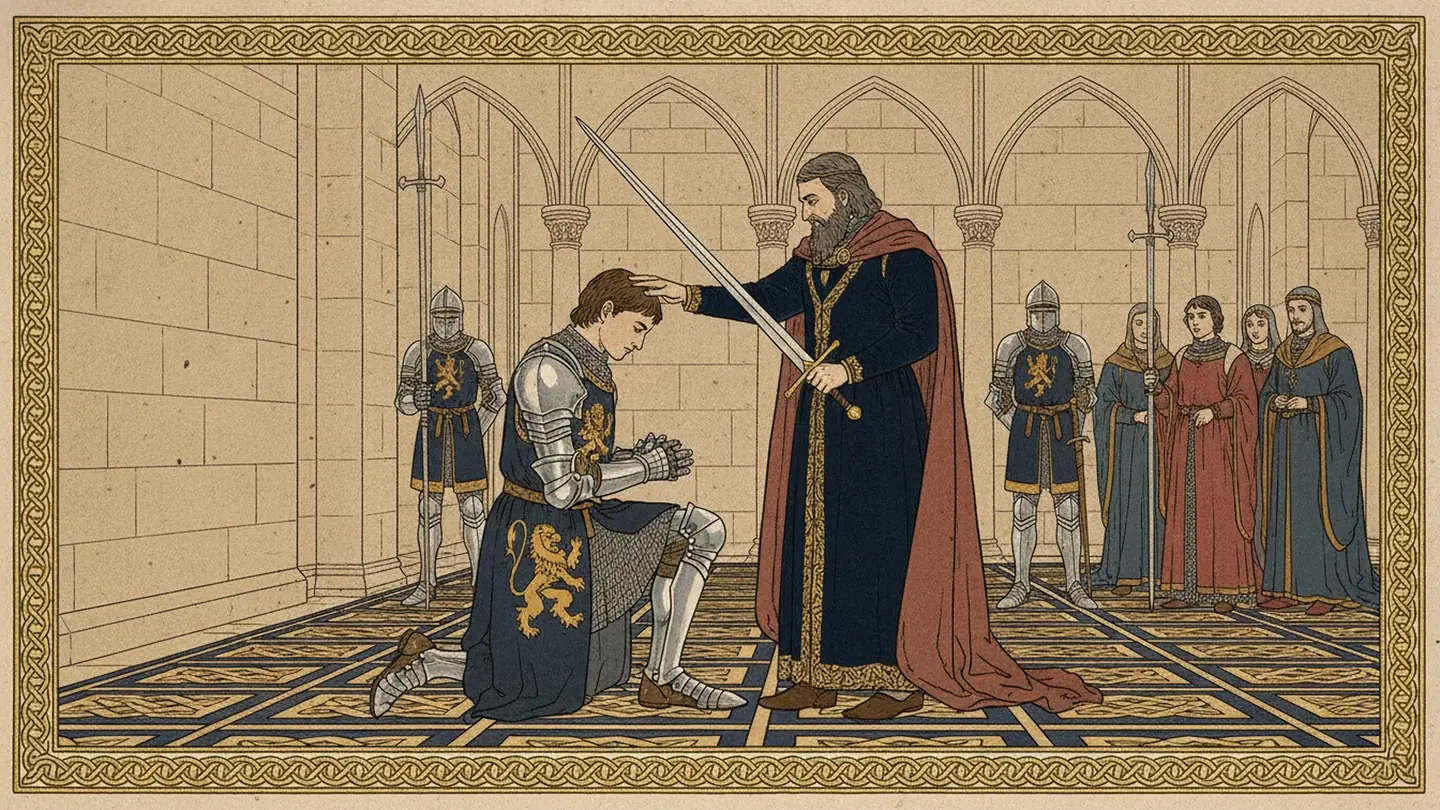
knight
Knight was once pronounced with a K and a throaty GH, something like "k-NIKHT". Here is how both sounds disappeared and the spelling stayed.
- Then · Old English
- cniht
- Say it
- NITE
knee
Knee was pronounced "k-NAY-oh" in Old English, K and all. German Knie still says the K. Here is when English dropped it and why the spelling stayed.
- Then · Old English
- cnēow
- Say it
- NEE
know
Know comes from Old English cnāwan, pronounced with a K. It shares an ancient root with Latin cognoscere and Greek gnosis. Here is how the K went silent.
- Then · Old English
- cnāwan
- Say it
- NOH
knife
Knife came into late Old English as cnīf, probably from the Vikings' Old Norse knífr, and the K was pronounced. Here is how it went silent.
- Then · late Old English
- cnīf
- Say it
- NIFE
When the K comes back
A silent K can wake up when it is no longer at the start of the word. Know has a silent K, but acknowledge — "ak-NAH-lij" — pronounces it, because the K now ends the first syllable instead of starting the word. After an ordinary prefix the K stays silent: unknown is "un-NOHN".
Silent K and homophones
Losing the K turned pairs of words into twins: knight / night, knew / new, know / no, knot / not. The spelling is the only thing that still tells them apart.
Questions people ask
+Why is the K silent in words starting with kn?
The K was pronounced until the 1600s, when English speakers simplified the kn- cluster to n-. The spelling had already been fixed.
+Was the K in knight ever pronounced?
Yes. Old English cniht began with a real K, as German Knecht still does.
+Is the K ever pronounced in kn- words?
Not at the start of a word. Inside a word it can be: acknowledge is "ak-NAH-lij".
More word stories
Why English spelling doesn't match the sound
Silent letters, odd vowels, colonel said "kernel": the three reasons English spelling stopped matching speech, with a story for each word.

The days of the week: gods, planets and lost sounds
Why the English days of the week are named after Woden, Thor, Frigg and Saturn, and how each name is pronounced in American English today.

The silent W: write, wrong, two, sword, answer
Why English spells a W in write, wrong, two, sword and answer but doesn't say it. Every one of those Ws was once a real sound.
The silent B: lamb, comb, thumb, debt, doubt
Some silent Bs were once pronounced (lamb, comb); others never were (thumb, debt, doubt). How to tell a lost sound from a letter that was added.

The lost GH sound: night, daughter, laugh and though
English GH was once a real sound, like German Nacht. Here is how it went silent in night and daughter but turned into F in laugh.

The silent T: castle, Christmas, often and fasten
Why castle, Christmas and fasten have a silent T, and why many people now say the T in often again. History plus American pronunciation tips.

Silent letters that were never pronounced
The B in debt, the P in receipt and the S in island were never said. Scholars added them to make English look Latin. Here is the full story.
The silent L: walk, half, calm, could and salmon
Why the L is silent in walk, half, calm, folk and should — and why could and salmon have an L that was never pronounced in the first place.