Illustration: the history of the word Wednesday
Wedsilentnesday
A sound people stopped saying

Why is the D in Wednesday silent?

Wednesday was "Woden's day", and English speakers once pronounced the D. Here is how the D went silent and why the spelling never changed.

Then · Old English

Wōdnesdæg

said like WOHD-nes-dai

late Middle English (1400s-1500s)↓

Now · American English

Wednesday/ˈwɛnzdeɪ/

said WENZ-day

The story

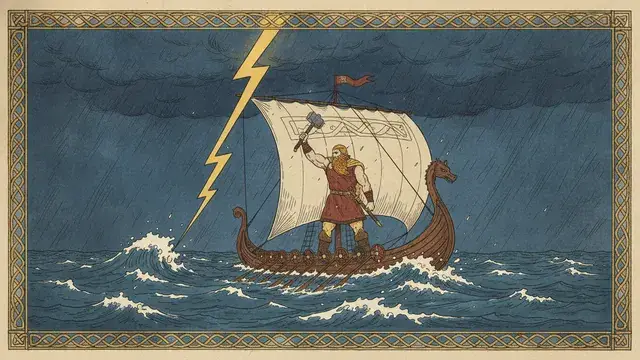
Wednesday is "Woden's day". Woden was the chief god of the pagan Anglo-Saxons — the same figure the Norse called Odin and the Germans Wotan: a god of wisdom, poetry, magic and the dead. Old English speakers called the day Wōdnesdæg, and they said every letter of it: something like WOHD-nes-dai, D included.

The name is a translation. The Romans called this day Mercurii dies, "day of Mercury" — hence French mercredi and Spanish miércoles. Germanic speakers matched Mercury, the wise traveller who guided souls, with Woden, and put their own god in his place.

The spelling settled in Middle English as Wednesday, with the vowel already shifted from Wōd- to Wed-. Then speech kept moving and the spelling did not. The cluster d-n-s is awkward to say, so speakers simplified it: the D dropped out and the middle vowel disappeared. By the late Middle Ages the everyday pronunciation was already close to WENZ-day — three written syllables, two spoken ones. Printers, and later dictionaries, fixed the old spelling in place.

Woden is still hiding in English place names — Wednesbury in the English Midlands is "Woden's fort". Dutch keeps him more openly in woensdag. German avoided the pagan name altogether and says Mittwoch, "mid-week".

How the word changed

  1. 1

    Latin

    Mercurii dies

    "Day of Mercury".

  2. 2

    Old English (before 1100)

    Wōdnesdæg

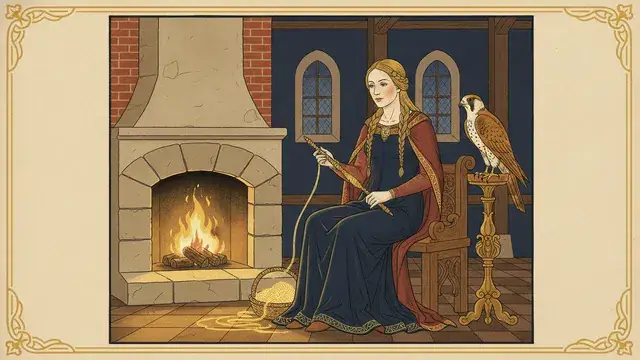
    Mercury swapped for Woden. Every letter is pronounced, D included.

  3. 3

    Middle English (1100-1500)

    Wednesdei, Wednesday

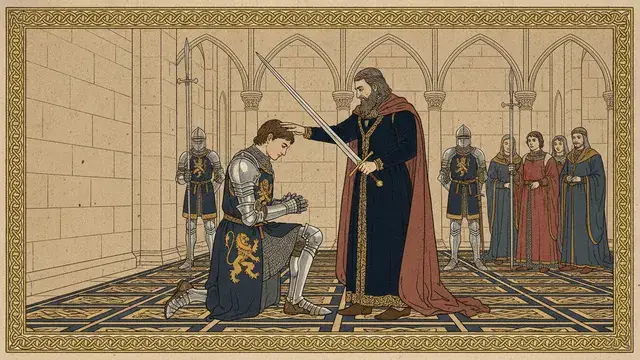
    The vowel shifts from o to e; the spelling settles.

  4. 4

    Late Middle English onward

    Wednesday

    Speech drops the D and the middle vowel: WENZ-day. The spelling stays.

Listen + practice

Hear “Wednesday” spoken naturally

Pick a sentence to record

Read the sentence aloud. Keep the stress on the particle and run the two words together — we’ll score every sound and flag what to work on.

Click to record

Questions people ask

+Why is Wednesday spelled with a D?

Because it was pronounced. The word comes from Old English Wōdnesdæg, "Woden's day", and the D was spoken until speakers simplified the cluster in late Middle English. The spelling had already been fixed.

+Who was Woden?

The chief god of the pagan Anglo-Saxons, the same figure as the Norse Odin. He was matched with the Roman god Mercury when the Roman week was translated.

+How do you pronounce Wednesday in American English?

WENZ-day, /ˈwɛnzdeɪ/ — two syllables, silent D, and the S sounds like Z.

+Do any languages still pronounce Woden's name in Wednesday?

Dutch woensdag and the Scandinavian onsdag ("Odin's day") still carry the god's name, in their own sound shapes.

Part of

Why is the D in Wednesday silent?