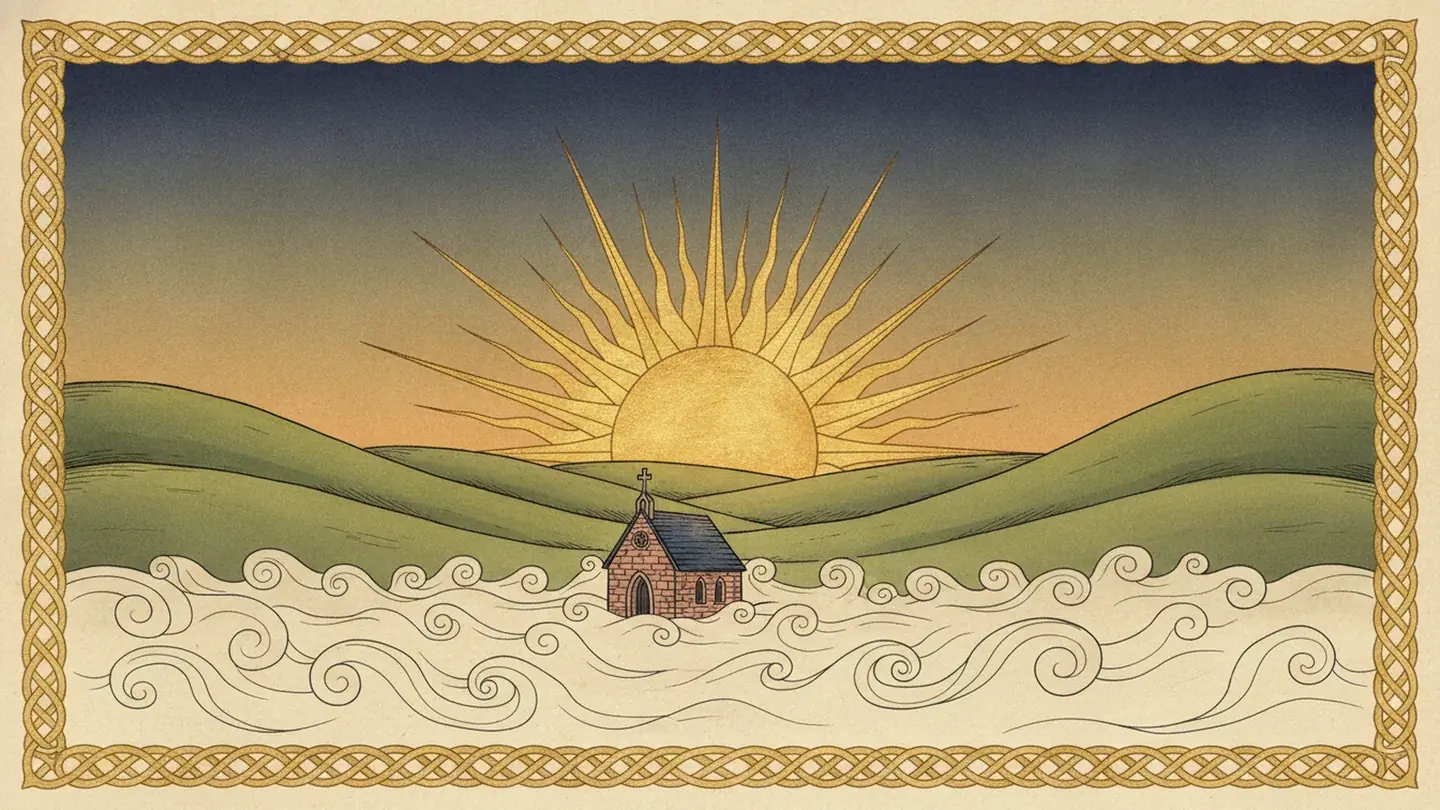
Illustration: the history of the word Sunday
Suchangednday
A sound that moved

Sunday: the sun's day, and the sound of "son"

Sunday is the sun's day, from Old English Sunnandæg. Its vowel moved from "oo" to "uh" — and son, spelled with an O, ended up sounding the same.

Then · Old English

Sunnandæg

said like SOON-nan-dai

1600s↓

Now · American English

Sunday/ˈsʌndeɪ/

said SUN-day

The story

Sunday is the sun's day. Old English Sunnandæg translated the Latin Solis dies, "day of the sun", just as Mōnandæg translated the moon's day. German Sonntag and Dutch zondag match it. The Romance languages renamed it for the Christian "Lord's day", dies Dominica — French dimanche, Spanish domingo.

The vowel has moved. In Old English the U of sunne was a short "oo", like the vowel in put. In the 1600s, in southern England, that short vowel split in two: in some words it stayed (put, full, bull), and in most it opened to the "uh" of modern sun, cup and but. American English inherited the split.

The same change caught son, which scribes had long spelled with an o — medieval handwriting wrote u, n and m as rows of identical vertical strokes, and an o next to them was easier to read. So sun and son, Sunday and Monday, now share one vowel spelled two ways.
How the word changed

  1. 1

    Latin

    Solis dies

    "Day of the sun".

  2. 2

    Old English (before 1100)

    Sunnandæg

    Translated: sunne (sun) + dæg (day). The u is a short "oo".

  3. 3

    Middle English (1100-1500)

    Sonday, Sunday

    Spelled with o or u; still a short "oo".

  4. 4

    1600s

    Sunday

    The FOOT-STRUT split: short "oo" opens to "uh".

Listen + practice

Hear “Sunday” spoken naturally

Pick a sentence to record

Read the sentence aloud. Keep the stress on the particle and run the two words together — we’ll score every sound and flag what to work on.

Click to record

Questions people ask

+Why is Sunday called Sunday?

It is the sun's day — Old English Sunnandæg, a translation of the Latin Solis dies.

+Why do sun and son sound the same?

They share the same old short vowel, which opened to "uh" in the 1600s. Son is spelled with an o because medieval scribes avoided writing u next to n and m.

Part of

Sunday: the sun's day, and the sound of "son"