Illustration: the history of the word though
thoughsilent
A sound people stopped saying

Why is though spelled with an OUGH?

Though comes from a Viking word that pushed out Old English þēah. Its GH is a fossil of a lost throaty sound; today it is just "tho".

Then · Old English

þēah

said like THAY-akh

Middle English to early Modern English↓

Now · American English

though/ðoʊ/

said THOH

The story

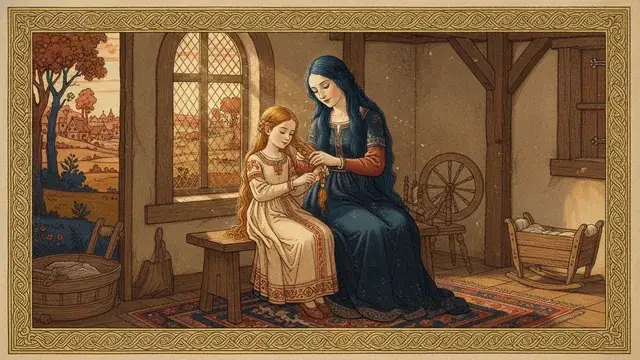
Old English had its own word: þēah, ending in a throaty H sound like the ch in German doch — which is a related word, as is Dutch doch. It survived into Middle English as thegh.

But in northern and eastern England, Norse-speaking settlers had a similar word of their own, þó (earlier þóh). In Middle English the Norse-shaped form, written thogh or though, spread and pushed out the native thegh in most dialects. Both forms go back to the same Germanic word.

The gh at the end recorded that throaty final sound. Like the GH in night and daughter, it was lost from speech, leaving a word that is spelled with six letters and pronounced with three sounds: TH-O. The spelling stayed because it was already established before the sound disappeared.

Though is part of the famous -ough family — though, through, tough, cough, bough — whose spellings all once marked the same lost sound, but which ended up pronounced in different ways. The informal spelling tho simply writes down what people actually say.
How the word changed

  1. 1

    Old English (before 1100)

    þēah

    Native word, ending in a throaty fricative.

  2. 2

    Old Norse

    þó (earlier þóh)

    The settlers' version of the same Germanic word.

  3. 3

    Middle English (1100-1500)

    thogh, though

    The Norse-shaped form replaces native thegh.

  4. 4

    Modern English

    though

    The GH is silent: THOH.

Listen + practice

Hear “though” spoken naturally

Pick a sentence to record

Read the sentence aloud. Keep the stress on the particle and run the two words together — we’ll score every sound and flag what to work on.

Click to record

Questions people ask

+Why is though spelled so strangely?

The GH recorded a throaty sound at the end of the old word. Speakers stopped pronouncing it, but the spelling was already fixed.

+Is though from Old Norse?

Its modern form is. Old English had þēah, but the Old Norse þó (þóh) displaced it in most Middle English dialects. Both come from the same Germanic root.

Part of

Why is though spelled with an OUGH?