The story
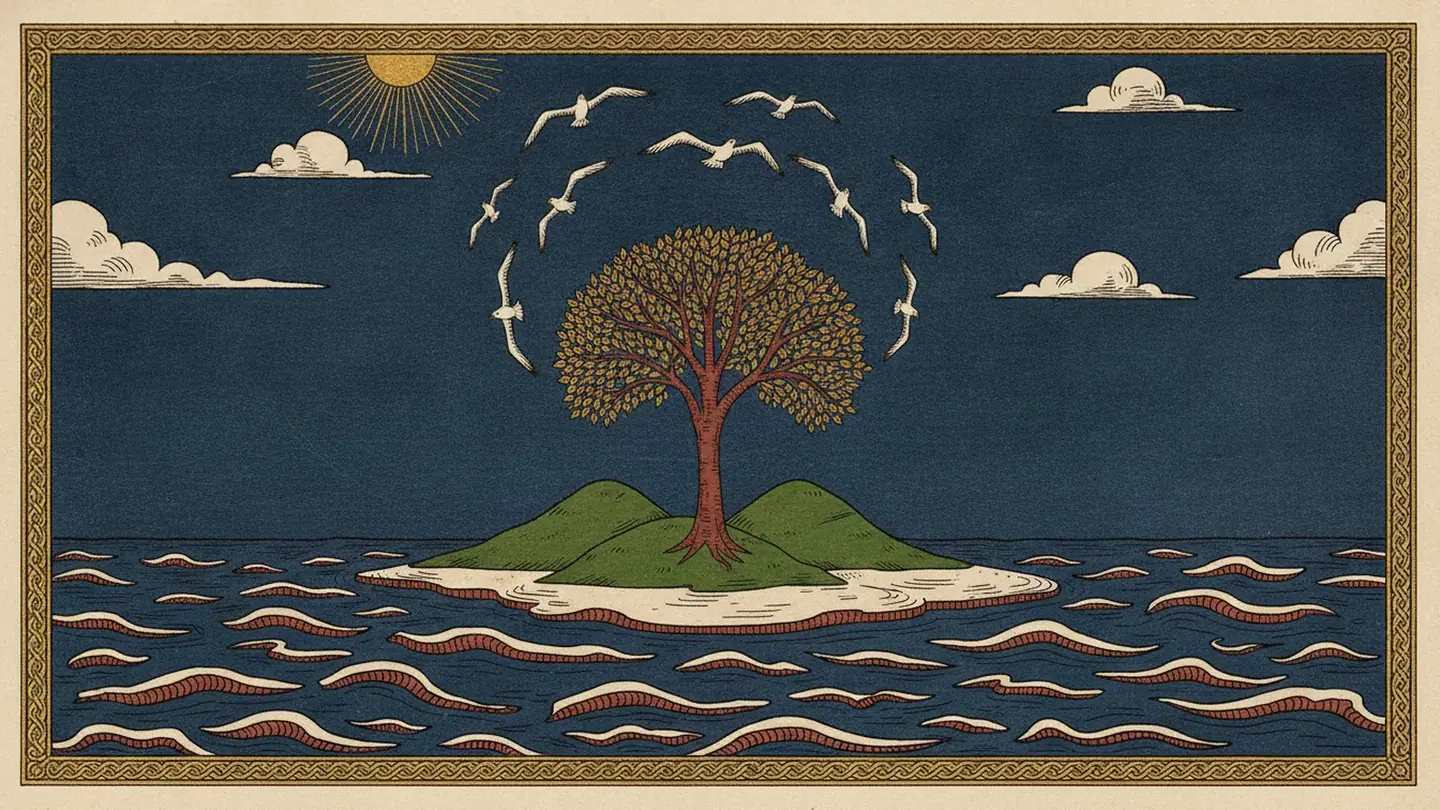
Island is an old English word, not a borrowed one. Old English said īeġland — roughly "water-land", land with water around it. By Middle English it had worn down to iland, yland or ylond. None of those spellings had an S, because the word never contained an S sound.
The S comes from a mistake. English also had isle, a quite separate word borrowed from Old French, which goes back to Latin insula. The two words look and mean alike, so in the 1500s writers assumed iland must be a form of isle and gave it the "proper" Latin-looking S: island.
It is the same impulse that put a B in debt, with one difference: in debt the B really is in the Latin ancestor. In island the S is copied from a word that is not related at all. And the joke runs deeper: isle itself had no S when it was first borrowed — French had dropped it — and acquired it the same way.