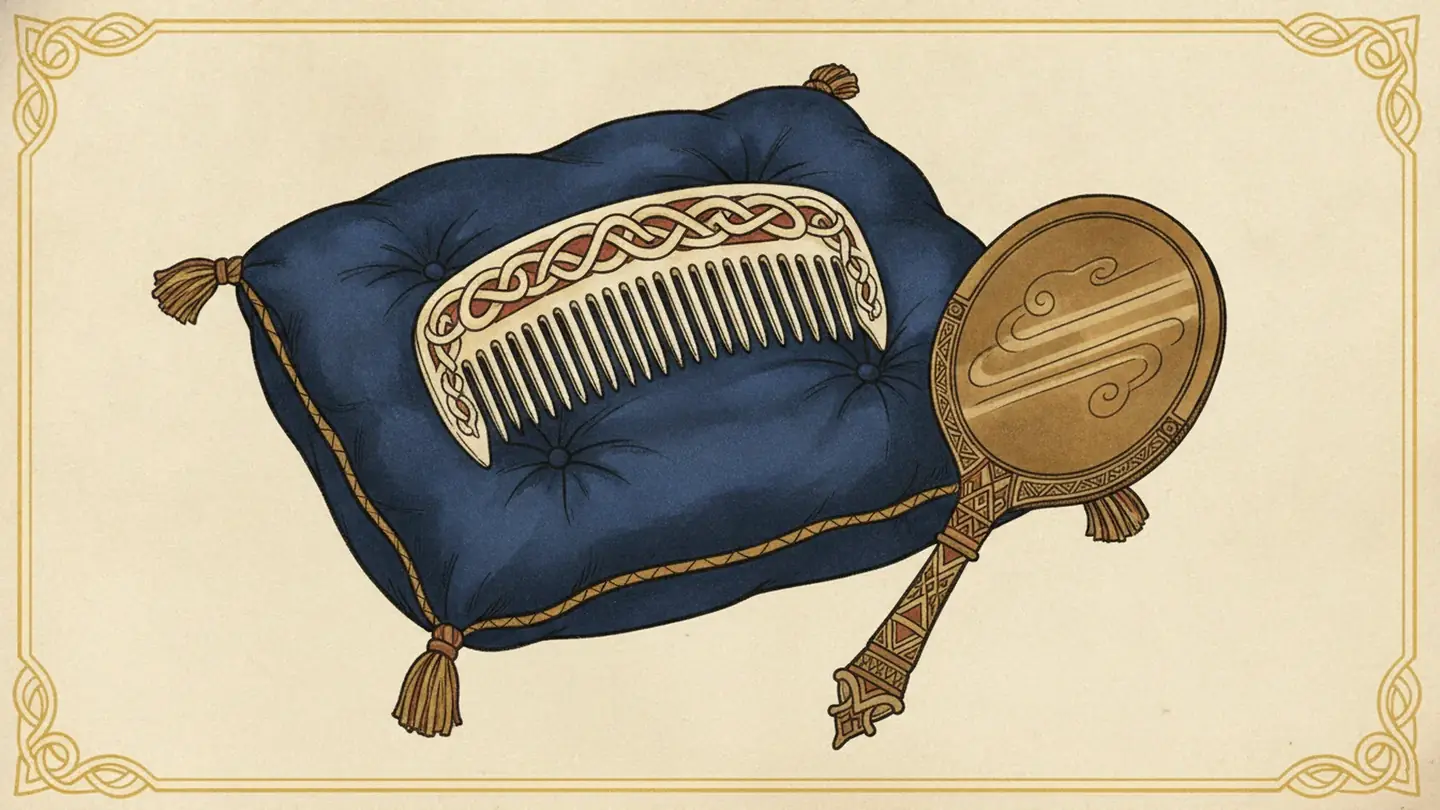
Illustration: the history of the word comb
combsilent
A sound people stopped saying

Why is the B in comb silent?

Comb comes from Old English camb, an ancient word for "tooth", and its B was once pronounced. Here is how the B went silent and the vowel moved.

Then · Old English

camb

said like KAHMB

later Middle English (1300s-1400s)↓

Now · American English

comb/koʊm/

said KOHM

The story

Comb is named for its teeth. Old English camb goes back to an ancient root meaning "tooth" — the same root behind Greek gomphíos, "molar". German Kamm and Dutch kam are the same word. A comb is, quite literally, "the toothed thing".

Two sounds in it have changed. The B was pronounced: the word ended in "-mb". In later Middle English, final -mb was reduced to plain M — the change that also silenced lamb and climb. And the vowel moved. Old English lengthened vowels before -mb, so the short "a" of camb became a long vowel that developed into the "oh" of modern comb.

The spelling b survives from before the change. Notice that comb and tomb and womb are all spelled -omb but each has a different vowel today — the spelling is older than all three pronunciations.
How the word changed

  1. 1

    Proto-Indo-European

    *ǵómbʰos

    "Tooth" — also behind Greek gomphíos, "molar".

  2. 2

    Old English (before 1100)

    camb

    Final B pronounced. Cousin of German Kamm.

  3. 3

    Later Middle English (1300s-1400s)

    comb

    Final -mb reduces to -m; the vowel is long.

  4. 4

    Modern English

    comb

    KOHM.

Listen + practice

Hear “comb” spoken naturally

Pick a sentence to record

Read the sentence aloud. Keep the stress on the particle and run the two words together — we’ll score every sound and flag what to work on.

Click to record

Questions people ask

+Why is the B in comb silent?

The B was pronounced in Old English camb, but later Middle English reduced every word-final -mb to -m. The spelling kept the B.

+Where does the word comb come from?

From Old English camb, from an ancient root meaning "tooth". German Kamm is the same word.

Part of

Why is the B in comb silent?