Illustration: the history of the word Christmas
Christsilentmas
A sound people stopped saying

Why is the T in Christmas silent?

Christmas is Christ's mass — Old English Cristes mæsse. Here is why the T went silent and why the "eye" of Christ became the short "i" of Christmas.

Then · Old English

Cristes mæsse

said like KREES-tes MAS-seh

Middle English to early Modern English↓

Now · American English

Christmas/ˈkrɪsməs/

said KRISS-muss

The story

Christmas is two words fused into one: Christ and mass. Old English called the feast Cristes mæsse, "Christ's mass" — the name of the church service celebrating his birth. In Middle English it became one word, Cristemasse.

Two sounds changed. First, the vowel. The vowel of Christ was long, and it later became the "eye" sound of modern Christ. But inside the compound it was short — and a short vowel did not take part in the Great Vowel Shift. So Christ says "eye" while Christmas says "i" as in kiss.

Second, the T. Squeezed between S and M, it was hard to say and dropped out of speech, just as T fell silent in castle and listen. The spelling kept Christ- whole, so readers can still see the two words inside.

The CH is also a fossil: it is the Latin way of writing the Greek letter chi in Christos, and it has been said as a plain K in English all along.

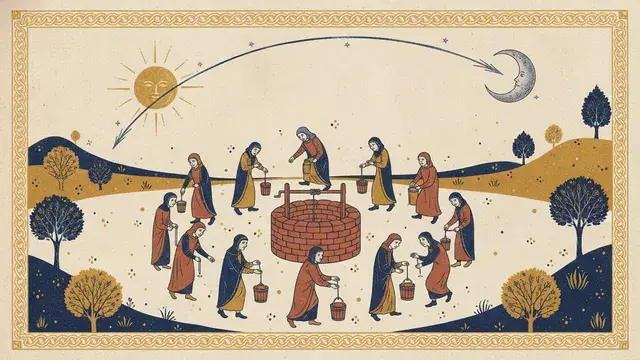
How the word changed

  1. 1

    Old English (before 1100)

    Cristes mæsse

    "Christ's mass", still two words.

  2. 2

    Middle English (1100-1500)

    Cristemasse

    Fused into one word, with a short vowel.

  3. 3

    Early Modern English

    Christmas

    The T between S and M is no longer pronounced.

  4. 4

    Modern English

    Christmas

    KRISS-muss — short i, silent T, weak final vowel.

Listen + practice

Hear “Christmas” spoken naturally

Pick a sentence to record

Read the sentence aloud. Keep the stress on the particle and run the two words together — we’ll score every sound and flag what to work on.

Click to record

Questions people ask

+Why is the T silent in Christmas?

Squeezed between S and M, the T dropped out of speech, as it did in castle and listen. The spelling kept it so the word Christ stays visible.

+Why is Christ pronounced with "eye" but Christmas with "i"?

In the compound the vowel was short, and short vowels weren't affected by the Great Vowel Shift — which turned the long vowel of Christ into "eye".

+What does Christmas literally mean?

"Christ's mass" — from Old English Cristes mæsse.

Part of

Why is the T in Christmas silent?