Phrasal verbs · 7 in this family
GIVE
/ɡɪv/On its own, give means to transfer something to someone else. Add a particle and it changes completely:
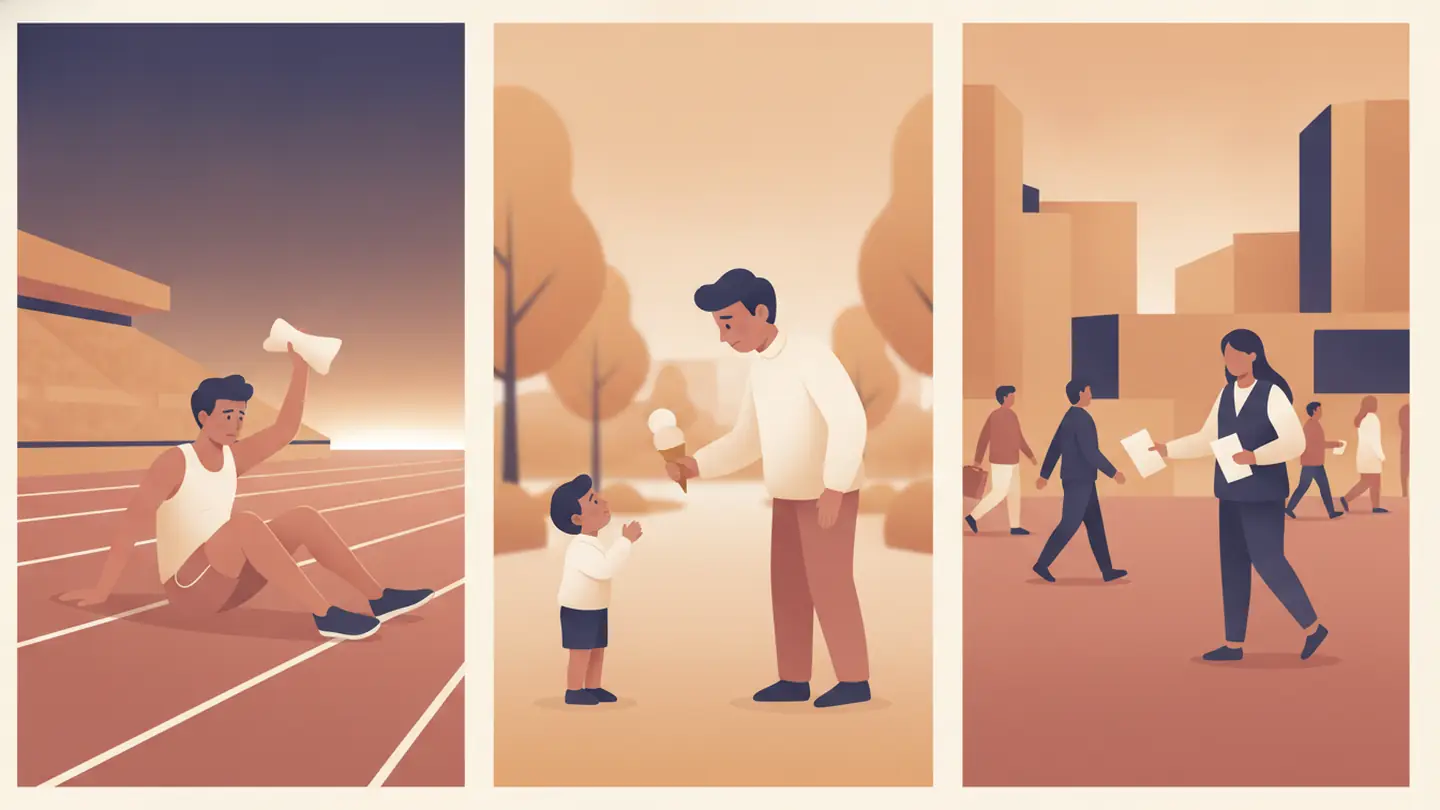
GIVE is release — you let go of something. The particle says how and to whom.
The four-way confusion is give up, give in, give out and give off. Give up = quit entirely. Give in = stop resisting someone else. Give out = distribute to many, or (of a machine or body) fail. Give off = emit a smell, heat or light. Only give up and give in are close in meaning, and even there the difference is sharp: you give UP on a goal, you give IN to a person.
GIVE ends in /v/, which links onto vowels: give up is “gi-vup”, give in is “gi-vin”.
Side by side
Every GIVE phrasal verb, with the one line that keeps it apart from its siblings. Tap any one to open it.
| Phrasal verb | Means | How to remember it |
|---|---|---|
| give upBoth3 meanings | stop trying; quit a habit | UP = the effort is finished, permanently. |
| give inNo object | stop resisting and accept what someone wants | IN = you let their pressure inside. |
| give outBoth2 meanings | distribute to many people; or stop functioning | OUT = it goes to everyone, until there is none left. |
| give offInseparable | emit heat, light or a smell | OFF = it radiates away from the source. |
| give awaySeparable2 meanings | donate; reveal a secret unintentionally | AWAY = it leaves you for good. |
| give backSeparable | return something to its owner | BACK = to where it came from. |
| give up onInseparable | lose faith in a person or plan | Add ON and the target becomes a person. |