
American English sound
/j/: how to pronounce “y” in yes, you and use
/j/ is the “y” sound of yes, you and yellow. In the IPA the letter j stands for this sound, not the j of jump, which is written /dʒ/.
It also hides in spelling: music, use, few and cute all have a /j/ (“myoo-zik”). Learners often turn it into the j of jump (yes becomes Jess) or drop it (year becomes ear).
/j/
the “y” sound
How to make the sound
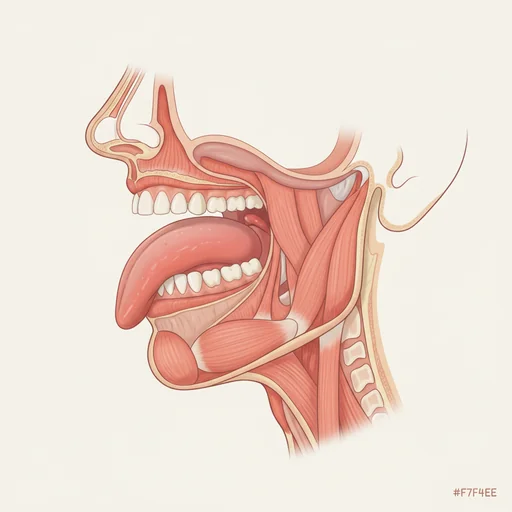
- 1Raise the middle of your tongue close to the hard palate, as for “ee”.
- 2Don't let it touch: the air must flow.
- 3Glide quickly from that position into the next vowel.
- 4Keep it soft: no friction, no closure.
- Tongue
- high-front
- Lips
- spread
- Voice
- voiced
Hear it in words
Tap a word to hear it.
At the start
In the middle
At the end
/j/ is never the last sound of a word: the y in day and boy is part of the vowel.
How it's spelled
- y: yes, you, yellow
- u / ew (as “yoo”): use, music, few, cute
- i before a vowel: onion, million, opinion
Common mistakes
Using the j of jump: “Jess” for yes
Some Spanish and Arabic speakers close the tongue. Keep a gap and glide.
Dropping it: “ear” for year
Year, yeast and yield start with /j/. Start from an “ee” position.
Missing the hidden y
Music, use and few have a y sound: “myoo-zik”, not “moo-zik”.
Minimal pairs
Each pair differs by one sound. If both words sound the same when you say them, practice this pair.
Try it
“Yesterday you used yellow yarn for your new yoga mat.”
Record a sentence and get a score for every sound, /j/ included. Free, no account.
Questions
Why is the y sound written /j/ in the IPA?
The IPA took j from languages like German and Polish, where the letter j sounds like English y (ja = yes). The j of jump needed its own symbol, /dʒ/.
Do Americans say “noos” or “nyoos” for news?
“Noos”: after t, d and n, American English drops the /j/ (news, student, Tuesday). After other consonants it stays (music, few, cute).