Phrasal verbs · 12 in this family
PUT
/pʊt/On its own, put means to place something somewhere. Add a particle and it changes completely:
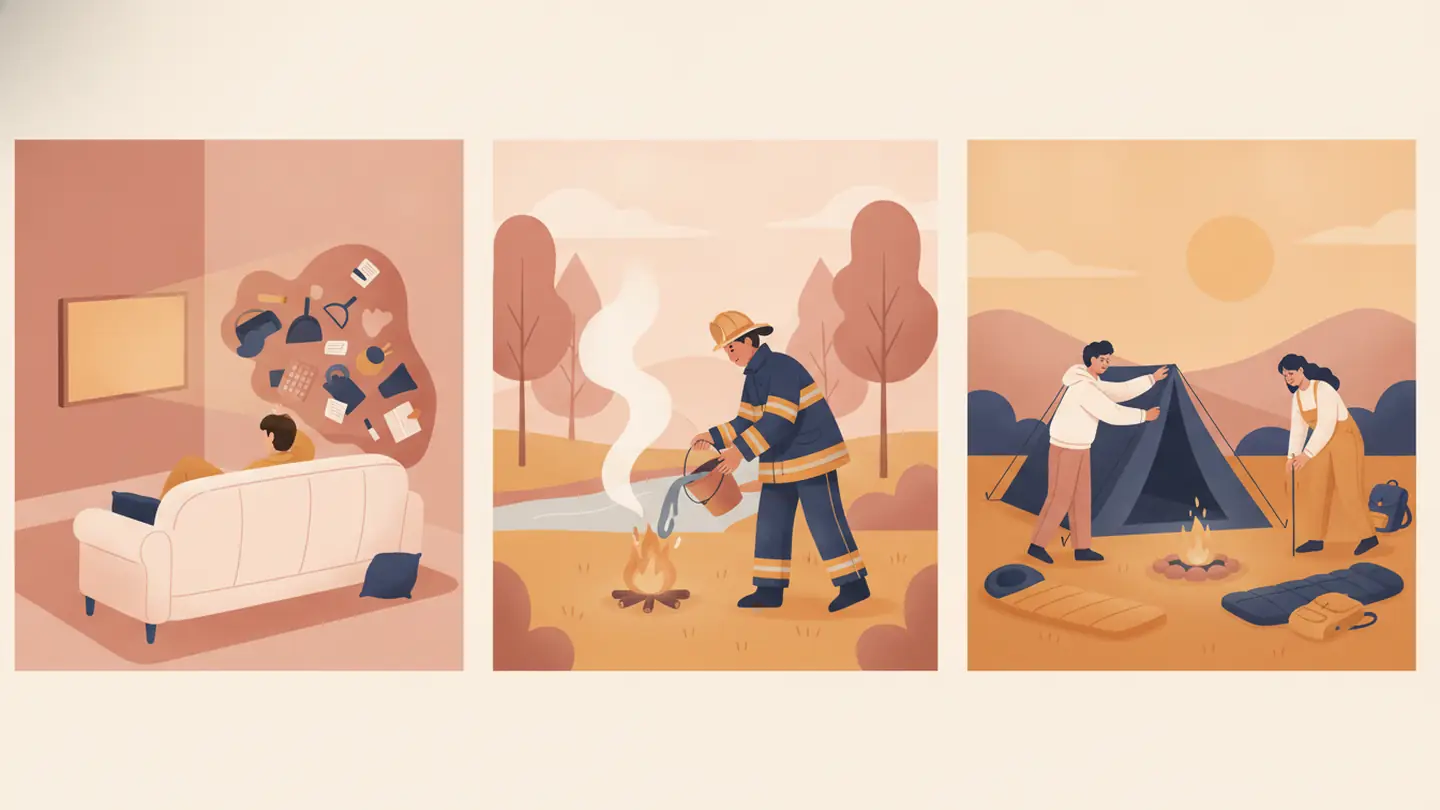
PUT is placement, and the particle is the destination — sometimes literal, usually not.
The classic trap is put off vs put out vs put up vs put up with. Put off postpones; put out extinguishes (or inconveniences); put up erects or accommodates; put up with tolerates. That last one is three words and inseparable — you can never say “put up it with”.
PUT ends in a post-vocalic /t/, so it flaps before every vowel-initial particle: put on is “pu-don”, put it away is “pu-di-da-way”. Native speakers essentially never release that T.
Side by side
Every PUT phrasal verb, with the one line that keeps it apart from its siblings. Tap any one to open it.
| Phrasal verb | Means | How to remember it |
|---|---|---|
| put offSeparable2 meanings | postpone; also, repel or disgust | OFF = push it away from now. |
| put outSeparable3 meanings | extinguish a fire or light; inconvenience someone | OUT = the flame goes out. |
| put upSeparable3 meanings | erect something; give someone a place to stay | UP = raise it, or take them in. |
| put up withInseparable | tolerate something unpleasant | Three words, never separated. UP WITH = endure alongside. |
| put onSeparable4 meanings | wear; switch on; pretend; gain weight | ON = onto a surface — your body, or a switch. |
| put awaySeparable | return something to its storage place | AWAY = out of sight, where it belongs. |
| put downSeparable3 meanings | set something down; criticize someone; euthanize | DOWN = lower it, including lowering a person. |
| put backSeparable2 meanings | return to its original place; delay | BACK = where it was before. |
| put inSeparable3 meanings | install; submit; invest time | IN = it goes inside the system. |
| put togetherSeparable | assemble from parts | TOGETHER = parts become one. |
| put throughSeparable2 meanings | connect a phone call; make someone endure something | THROUGH = it passes across to the other side. |
| put asideSeparable2 meanings | save for later; ignore temporarily | ASIDE = moved to the edge, not gone. |