
American English sound
/z/: how to pronounce “z” in zoo, easy and is
/z/ is the buzzing sound in zoo and zero. It's made exactly like /s/, with your voice on.
Most American /z/ sounds aren't spelled with z at all: is, was, easy, music and the plural endings of days and bags all have /z/. Saying /s/ there is one of the most common accent markers.
/z/
the “z” sound
How to make the sound
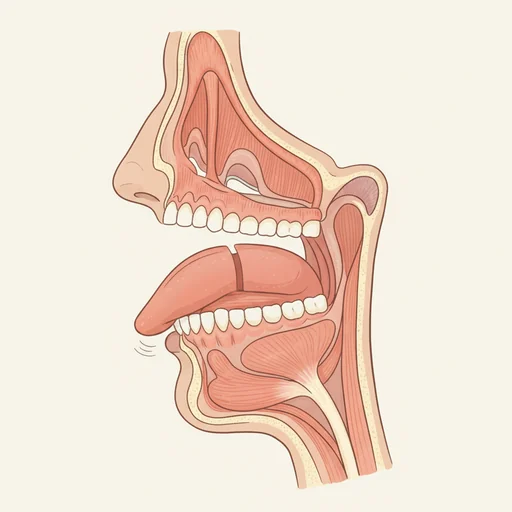
- 1Put your tongue as for /s/: the tip close to the ridge behind your upper teeth, without touching it.
- 2Turn your voice on: with a hand on your throat, you should feel a buzz.
- 3Push the air through the narrow gap while the buzz continues.
- 4Keep the buzz going to the end of words like is, was and days.
- Tongue
- tip-alveolar
- Lips
- spread
- Voice
- voiced
Hear it in words
Tap a word to hear it.
At the start
In the middle
At the end
How it's spelled
- z / zz: zoo, lazy, buzz
- s between vowels: easy, music, rose
- s in small words: is, was, has, his
- plural -s after a voiced sound: days, bags, cars
- x at the start (rare): xylophone
Common mistakes
Saying /s/: “sue” for zoo
Without voice, /z/ becomes /s/. Hum while you say it; you should feel the buzz.
Losing the voice at the end
Is becomes “iss” and days becomes “dace”. Keep the buzz to the end of the word.
Reading every s as /s/
Is, was, easy, music and most plurals use /z/. Listen for the buzz in the examples above.
Who finds /z/ hard
Speakers of these languages often replace it with a sound from their own language. Linked languages have their own accent traps page.
Often say /s/ instead
Spanish, Thai
Often say /dʒ/ instead
Korean
Minimal pairs
Each pair differs by one sound. If both words sound the same when you say them, practice this pair.
Try it
“Zoe is busy with the music at the zoo.”
Record a sentence and get a score for every sound, /z/ included. Free, no account.
Questions
When does a final -s sound like /z/?
After a voiced sound: a vowel or b, d, g, l, m, n, r, v, as in days, bags, cars and dreams. After a voiceless sound (p, t, k, f) it stays /s/, as in cats and books.
Why is “is” pronounced with a z?
Small, frequent words like is, was, has, his and as kept the voiced /z/ even though they're spelled with s.