
American English sound
/ð/: how to pronounce the voiced “th” in this and mother
/ð/ is the voiced “th” in this, they and mother. The tongue is in the same place as for /θ/ in think, but your voice is on, so you feel a buzz.
It's in the most frequent words of the language: the, this, that, they, there, then. Getting /ð/ right changes how natural every sentence sounds.
/ð/
the voiced “th”
How to make the sound
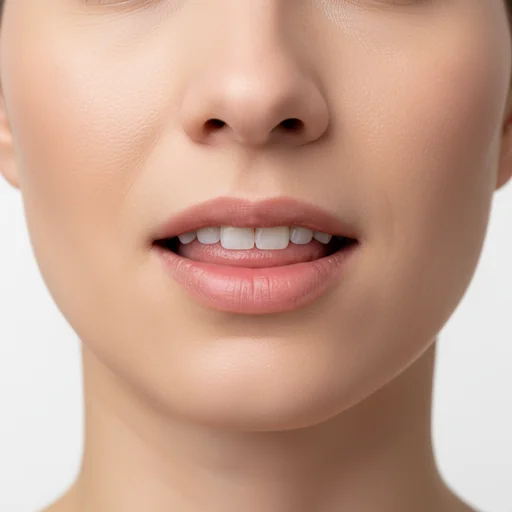
- 1Touch the tip of your tongue lightly to the back of your upper front teeth, or put it just between your teeth.
- 2Turn your voice on: with a hand on your throat, you should feel a buzz.
- 3Let the air flow gently through the gap while your voice keeps buzzing.
- 4Keep the contact light. Pressing hard turns it into a /d/.
- Tongue
- tip-dental
- Lips
- neutral
- Voice
- voiced
Hear it in words
Tap a word to hear it.
At the start
In the middle
At the end
How it's spelled
- th: this, mother, together
- the at the end of a word: breathe, bathe, clothe
Common mistakes
Saying /d/: “day” for they
The tongue presses and stops the air. Touch lightly and let the air keep flowing while you buzz.
Saying /z/: “zis” for this
The tongue stays behind the teeth. Bring the tip forward until it touches the upper teeth.
Saying /v/: “bruvver” for brother
The lower lip touches the teeth instead of the tongue. Keep the lip relaxed and use the tongue tip.
Forgetting the voice
Without voice, this starts to sound like the th in think. Hum while you say it.
Who finds /ð/ hard
Speakers of these languages often replace it with a sound from their own language. Linked languages have their own accent traps page.
Often say /d/ instead
Chinese, Hindi, Indonesian, Italian, Polish, Thai, Turkish, Vietnamese
Often say /z/ instead
French, German, Japanese, Russian
Minimal pairs
Each pair differs by one sound. If both words sound the same when you say them, practice this pair.
Try it
“Those other brothers gathered there together.”
Record a sentence and get a score for every sound, /ð/ included. Free, no account.
Questions
Why do breath and breathe sound different?
The noun breath ends in voiceless /θ/; the verb breathe ends in voiced /ð/, and its vowel is longer. Bath and bathe, cloth and clothe work the same way.
Is it a problem if I say “da” for “the”?
People will usually understand you, but it's one of the strongest signs of a foreign accent, because “the” is in almost every sentence. A light /ð/ is worth practicing first.