
American English sound
/ʌ/: how to pronounce the short “u” in cup, love and money
/ʌ/ is the short, relaxed vowel in cup, love and money. The mouth is half open and the tongue rests in the middle, a little lower than for schwa.
Its spellings are the tricky part: u in cup, but o in love, money and son, and ou in young and country. Reading those o's as an “oh” is a very common mistake.
/ʌ/
the “cup” vowel
How to make the sound
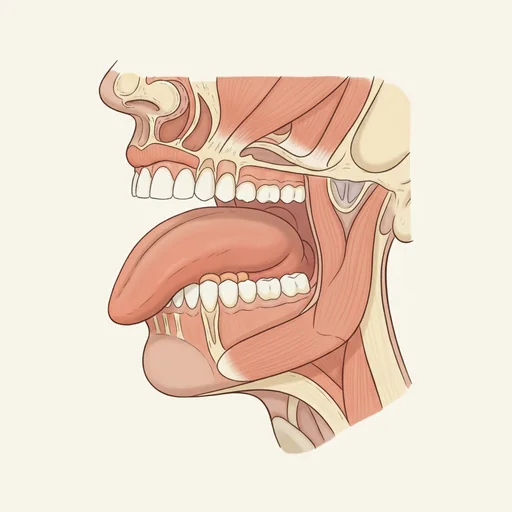
- 1Open your mouth about halfway; relax your jaw.
- 2Let your tongue rest low in the middle of your mouth, neither forward nor back.
- 3Keep your lips relaxed and unrounded.
- 4Make it short: a quick “uh” with a little more strength than schwa.
- Tongue
- mid-central
- Lips
- neutral
- Voice
- voiced
Hear it in words
Tap a word to hear it.
At the start
In the middle
At the end
/ʌ/ doesn't end English words: a consonant always follows it.
How it's spelled
- u: cup, sun, but
- o: love, money, son, come
- ou: young, country, touch
- oo (rare): blood, flood
Common mistakes
Too open, like “hot”
If the jaw drops and the tongue pulls back, cup becomes cop and luck becomes lock. Open only halfway.
Reading the o as “oh”
Love, money, son, come and some all use /ʌ/, not the vowel in go. Learn these o-words by ear.
Too far forward, like “cat”
Spreading the lips and pushing the tongue forward turns cut into cat. Keep everything relaxed and central.
Minimal pairs
Each pair differs by one sound. If both words sound the same when you say them, practice this pair.
Try it
“Uncle Gus loves his sunny Sunday lunch.”
Record a sentence and get a score for every sound, /ʌ/ included. Free, no account.
Questions
What's the difference between /ʌ/ and schwa /ə/?
They're very close. /ʌ/ is used in stressed syllables (cup, love) and is a little stronger and more open; schwa is the weaker version in unstressed syllables (about, sofa).
Why is “love” spelled with an o?
Medieval scribes wrote o instead of u next to letters like v, m and n, which were hard to read in handwriting. The spelling stayed; the sound didn't change. Come, some, son and money are the same story.