
American English sound
/æ/: how to pronounce the American “a” in cat
/æ/ is the vowel in cat, map and laugh. It's one of the most recognizably American sounds: the jaw drops wide, and the tongue stays low and pushed forward.
Before m and n, as in man, can and hand, most Americans stretch it into a slight glide, so “man” can sound a little like “meh-an”. Before other consonants it stays flat and open.
/æ/
the “cat” vowel
How to make the sound
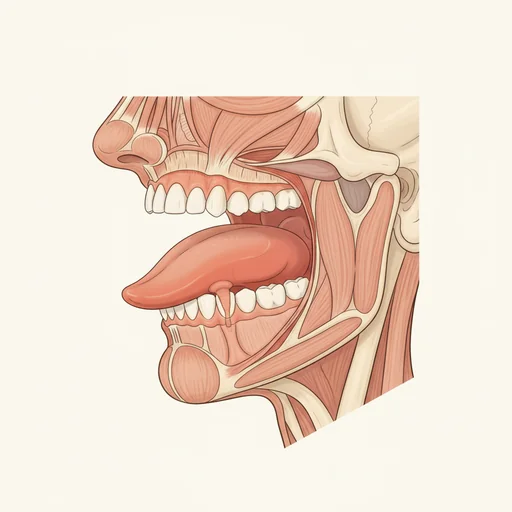
- 1Drop your jaw further than for the vowel in “bed”, about two fingers' height.
- 2Rest the tip of your tongue behind your bottom front teeth; keep the tongue low and forward.
- 3Spread your lips slightly, as if you were starting a smile.
- 4Hold it a little longer than feels natural: American /æ/ is not a clipped sound.
- Tongue
- low-front
- Lips
- spread
- Voice
- voiced
Hear it in words
Tap a word to hear it.
At the start
In the middle
At the end
/æ/ doesn't end English words: a consonant always follows it.
How it's spelled
- a: cat, hand, black, family
- a before a double consonant: happy, apple, rabbit
- au (rare): laugh
Common mistakes
Too far back, like “hot”
If the tongue pulls back, hat becomes hot and cap becomes cop. Keep the tongue forward and the jaw low.
Merging with “bed”
With too little jaw drop, bad sounds like bed and man like men. Open wider than you think you need to.
Merging with “cup”
A relaxed, central tongue turns cat into cut. Spread the lips and push the tongue forward.
Who finds /æ/ hard
Speakers of these languages often replace it with a sound from their own language. Linked languages have their own accent traps page.
Often say /ɛ/ instead
German, Hindi, Indonesian, Italian, Polish, Portuguese, Russian, Turkish
Often say /a/ instead
Japanese
Often say /ɑ/ instead
Spanish
Minimal pairs
Each pair differs by one sound. If both words sound the same when you say them, practice this pair.
Try it
“That black cat ran back to Dad's van.”
Record a sentence and get a score for every sound, /æ/ included. Free, no account.
Get my free scoreQuestions
Is American /æ/ the same as the British “a” in bath?
Not in many words. Bath, ask, can't and dance use /æ/ in American English but a long /ɑː/ in southern British English. So “can't” sounds very different in the two accents.
Why does “man” sound different from “mat”?
Before m and n, Americans usually raise /æ/ and add a small glide (linguists call it æ-tensing). Before t, p, k and most other consonants, it stays flat and open.